
 TRIAL LESSON
The next note begins
before it sounds.
Preparation is part of playing. In WKMT’s terminology, a “negative movement” prepares the sound-producing gesture. Its timing and size should serve the phrase, rather than interrupt it.
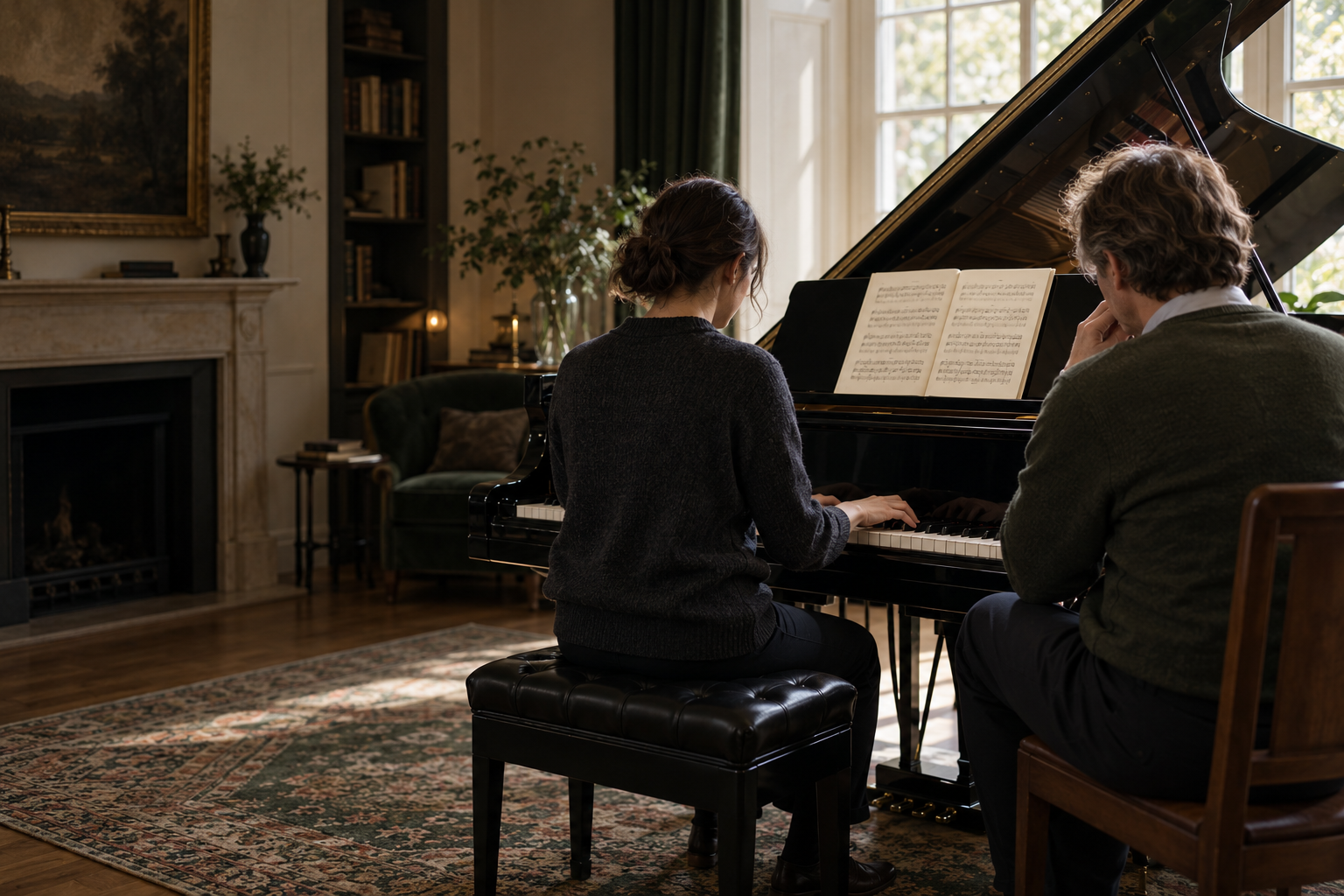
Scaramuzza piano technique, explored through clear explanations, close listening and individual teaching in London.
Illustrative AI-created scene · not a historical photograph
Technique is the connection between the sound you imagine and the movement that makes it possible.
Vicente Scaramuzza’s teaching tradition asks us to look closely at how the pianist works with the instrument. At WKMT, that means making movement understandable: what prepares a note, what produces it, and how one gesture leads into the next.
Our published teaching archive breaks these ideas into practical subjects. This is your starting point—not a substitute for a teacher observing your playing.
Scaramuzza taught Martha Argerich and Bruno Leonardo Gelber. Their biographies document that connection; their achievements are not a promise of what any particular method will deliver.
WKMT’s own connection is a living teaching practice, supported here by articles and demonstrations from its archive—not a claim of endorsement by those artists.
A concise route into a rich teaching tradition. These are guiding ideas, not a complete method or a universal exercise prescription.
Preparation is part of playing. In WKMT’s terminology, a “negative movement” prepares the sound-producing gesture. Its timing and size should serve the phrase, rather than interrupt it.
Fingers work within a coordinated system. WKMT’s finger and forearm studies examine how support, contact and movement relate. The aim is purposeful coordination, not simply working harder.
A flowing line, an accompaniment and a chord need not feel the same. Learning a vocabulary of movements gives you choices; your teacher helps decide how to combine them in the passage you are playing.
A movement is useful because of what it lets you express. Listen to the balance of a chord, the shape of a phrase and the continuity between notes. Technique becomes meaningful when it changes what you hear.
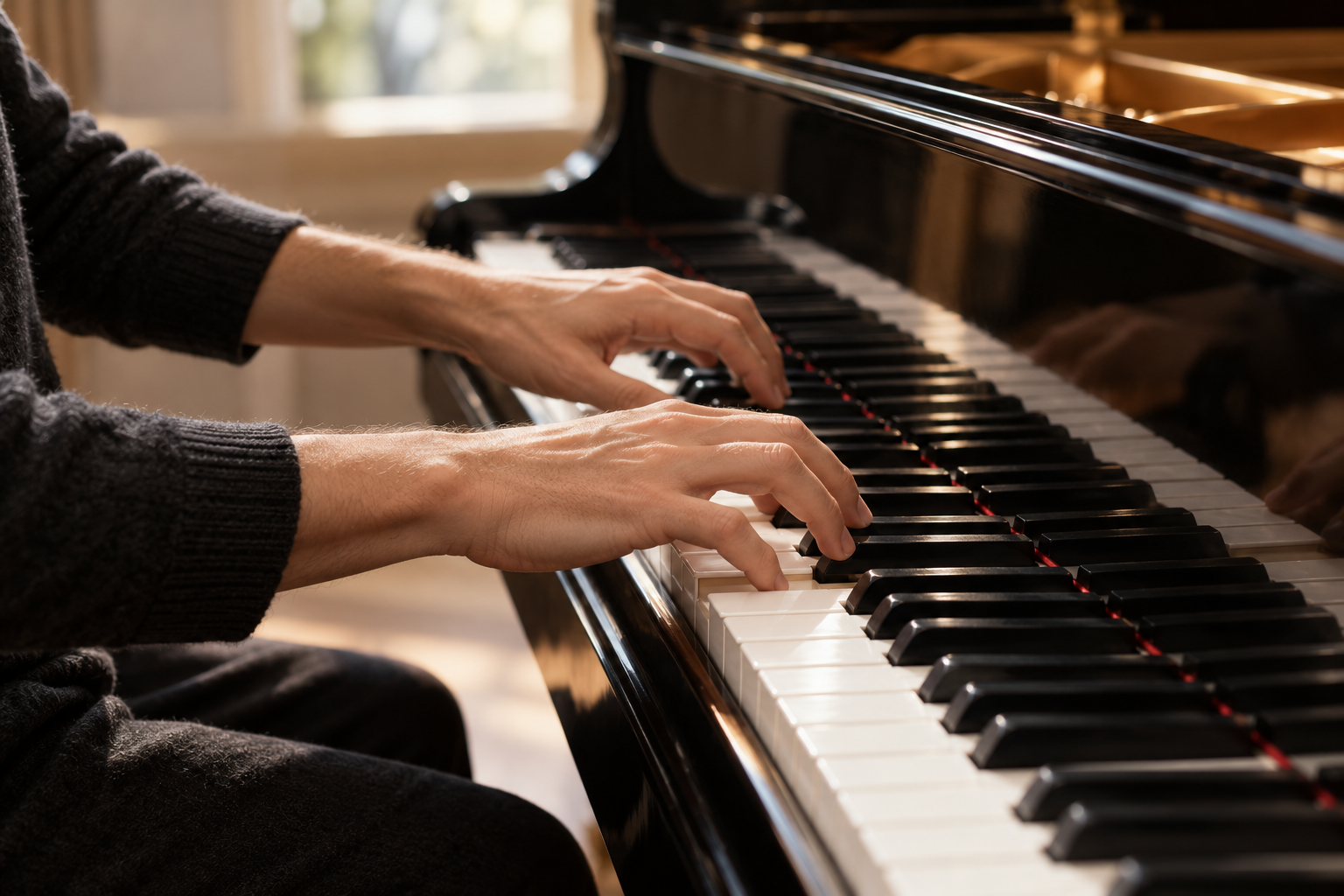
You can read about movement. In a lesson, you can hear a demonstration, ask a question and discover how an idea relates to your own hands and repertoire.
Bring a passage you find difficult—or simply your curiosity. A useful conversation begins with what happens when you play.
WKMT’s archive separates these subjects for study. In playing, they can work together. Open a topic for an accessible introduction and its deeper reading.
Watch the rotation demonstration ↗Video linked from WKMT’s published rotation article.
A starting point for exploring contact, articulation and the relationship between the finger and the support of the arm. Think of clarity and coordination, not finger strength in isolation.
A subject in WKMT’s study of articulated gestures and their preparation. A visible wrist action is not the whole explanation: it belongs to a larger coordination.
The archive explores preparation and the sound-producing phase, including applications to selected repeated notes, octaves and chords. Size and timing need individual guidance.
A broader gesture studied in relation to slower chords, accompaniment and voicing. The musical question is how to give different notes their appropriate balance.
WKMT discusses forearm rotation in passages such as Alberti bass and tremolo. It is a coordinated gesture, not an instruction to twist the wrist or force a fixed position.
Explore the articles linked from our existing Scaramuzza collection. Read an explanation, watch a demonstration where available, and bring your questions to a lesson.
These articles reflect WKMT’s teaching explanations. Terminology and approaches can vary between teachers. Photographs on this page are illustrative, not technical instructions.
Explore Scaramuzza-informed piano study with WKMT in London.